
What is cable jointing?
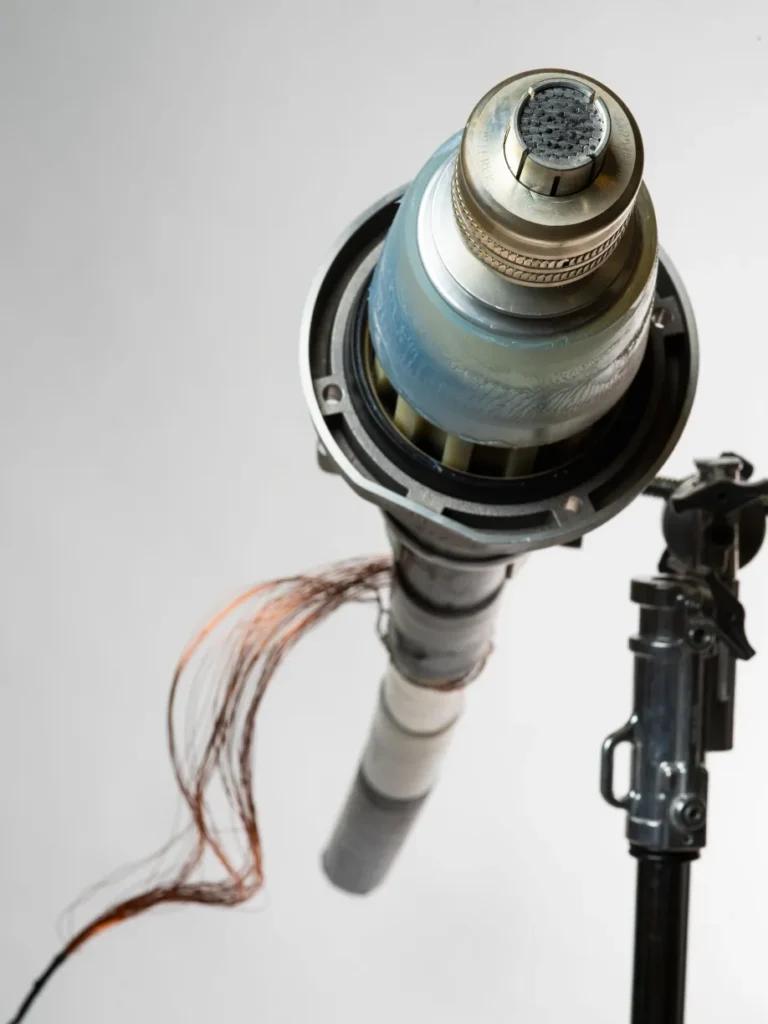
Cable jointing is the work of connecting two lengths of power cable so that the connection carries the current and holds back the voltage as reliably as the cable itself. The result is a cable joint, sometimes called a splice. It has to rebuild every layer of the cable across the connection: the conductor, the insulation, the screens and the outer protection. Joints are needed because cables are made and transported in limited lengths, to connect new cables to existing networks, and to repair damaged cables.
Types of cable joints
- Straight-through joints: connect two cables of the same type and size.
- Transition joints: connect different cable types or sizes, such as a modern XLPE cable to an older paper-insulated cable.
- Branch joints: take a branch off a main cable, mainly in low- and medium-voltage networks.
- Repair joints: replace a damaged section of cable, on land or on subsea cables, usually with two joints and a new length of cable in between.
Joints are fitted with heat-shrink, cold-shrink or pre-moulded systems. On long high-voltage circuits, joints can also interrupt the cable screens for cross-bonding, which reduces losses in the screens.
How a cable joint is made
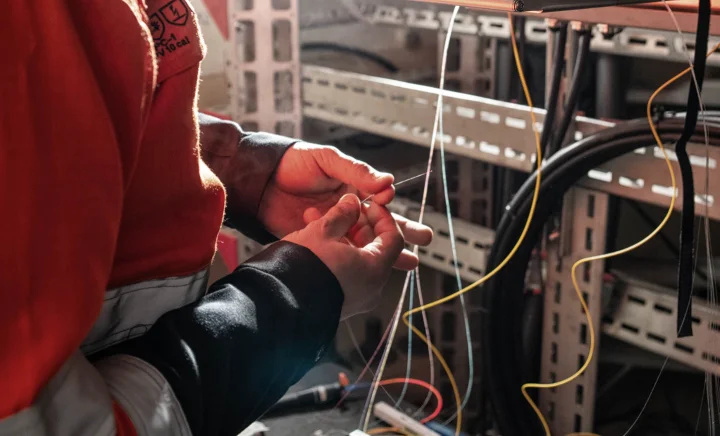
The jointer prepares both cable ends. They remove the outer sheath, armour and metallic screen, cut back the semiconducting insulation screen to exact dimensions and clean the insulation. The conductors are connected with a compression or mechanical (shear-bolt) connector. Stress control and new insulation are then built over the connection, the semiconducting and metallic screens are restored, and an outer protection seals the joint against water. Cleanliness and exact dimensions decide whether a joint lasts for decades. Moisture, dust or a scratched insulation surface can cause partial discharge and, eventually, a breakdown.
Testing cable joints
After installation, the cable system and its joints are tested before energisation. Common tests are insulation resistance testing, VLF withstand testing, tan delta and partial discharge measurements. When an existing cable fails, cable fault location finds the faulty joint or section.
Cable jointing at Reynard
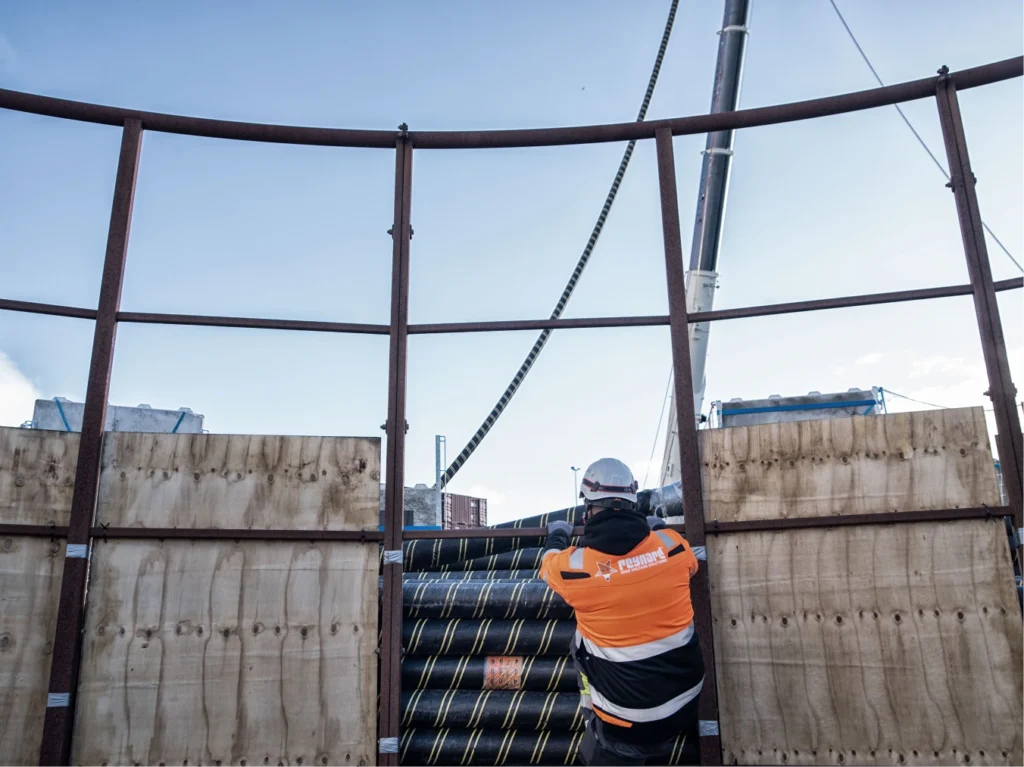
Reynard’s HV jointers joint and terminate cables up to 400 kV. They work on onshore grid connections, offshore wind projects and repairs to existing cable systems. Joints are usually tested with Reynard’s mobile high-voltage testing. Reynard Academy trains new jointers in its HV Jointer Training. Need cables jointed? Contact Reynard.