
Battery storage has become a cornerstone of modern energy systems, enabling businesses, industries, and households to manage energy more efficiently. In essence, battery storage involves storing excess energy for later use, ensuring stable and reliable power delivery. While household systems are growing in popularity, the real impact of battery storage lies in industrial energy storage, which supports large-scale operations and renewable integration.
If you are interested in how energy storage integrates into advanced energy solutions, explore our Services or reach out via our Contact page.
What is Battery Storage?
Battery storage is the process of storing electricity in rechargeable batteries so that it can be used later when demand is high or generation is low. In large-scale applications, this is often referred to as a Battery Energy Storage System (BESS)—an integrated solution that combines battery units, power conversion systems, and control software to manage energy flow. BESS plays a vital role in stabilizing power grids, supporting renewable energy integration, and providing backup power for industries, utilities, and even households. By capturing surplus energy and releasing it when needed, these systems improve efficiency, resilience, and sustainability across the energy sector.
Why Battery Storage Matters
Energy demand fluctuates throughout the day, creating stress on the grid and energy providers. Battery storage helps by:
- Balancing supply and demand in real time.
- Storing renewable energy during periods of surplus.
- Providing backup power during outages or peak demand.
- Reducing reliance on fossil fuels by enabling consistent use of renewable energy.
For industries, this means uninterrupted operations and cost savings, while households benefit from energy independence and resilience.
Industrial Energy Storage
Industrial energy storage represents the backbone of the energy transition. Manufacturing plants, data centers, and utilities require stable and reliable electricity to function. By integrating large-scale battery storage systems (BESS), industries can:
- Stabilize Operations: Avoid costly downtime during grid disruptions.
- Manage Peak Demand: Shift energy consumption away from expensive peak hours.
- Integrate Renewables: Smooth out the intermittency of wind and solar power.
- Support Microgrids: Build resilient, self-sufficient local energy systems.
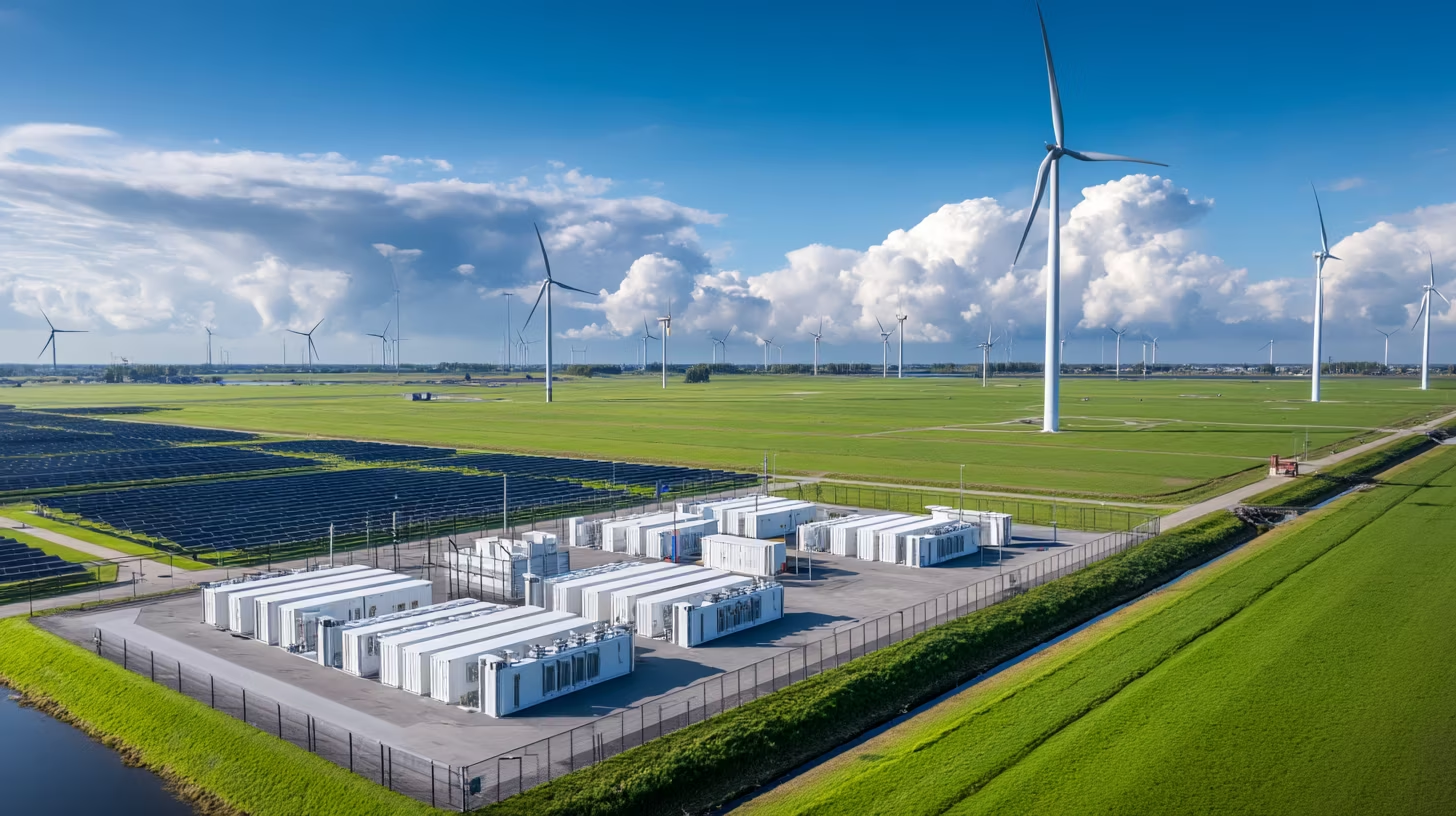
Industrial battery storage systems often use lithium-ion or flow battery technology, chosen for their durability, scalability, and efficiency. These solutions are typically housed in containerized units, making them easy to install at industrial sites or near renewable plants.
Battery Storage in Renewable Energy Projects
Battery storage is inseparable from renewable energy. Wind and solar power are intermittent by nature; storage systems help bridge the gap between generation and demand. For example, an offshore wind farm can generate power at night when demand is low, and a battery system ensures this energy is available during the daytime when consumption rises.
Large industrial storage also supports grid stability by providing frequency regulation and fast response times—critical for balancing national grids.
Household Battery Storage
Although the focus is on industry, household storage systems deserve mention. Homeowners increasingly install small-scale batteries alongside solar panels. This enables them to:
- Store excess solar energy during the day.
- Reduce reliance on the grid at night.
- Maintain power supply during outages.
- Save on electricity bills by using stored power during peak tariff hours.
While these systems are smaller in scale compared to industrial units, the principle remains the same—greater control over when and how energy is consumed.
Technologies Behind Storing Energy
Several technologies are currently driving battery storage forward:
- Lithium-Ion Batteries: Dominant in both industrial and household markets due to high energy density and efficiency.
- Flow Batteries: Well-suited for large-scale, long-duration storage with greater lifespan.
- Solid-State Batteries: An emerging technology promising higher safety and efficiency.
- Hybrid Systems: Combining different storage technologies to maximize flexibility.
Industrial projects often rely on lithium-ion and flow batteries, while household systems typically use lithium-ion. An interesting project in energy storage is Tesla’s Megapack Plan. Read more about it here.
Benefits of Battery Storage for Industry
The adoption of industrial energy storage offers numerous advantages:
- Cost Savings: Lower energy costs by reducing peak demand charges.
- Resilience: Backup power prevents downtime during outages.
- Sustainability: Greater reliance on renewables reduces carbon footprints.
- Flexibility: Enhanced energy management through smart storage solutions.
- Scalability: Systems can be expanded to meet growing energy needs.
Challenges in Storing Energy
Despite its many benefits, battery storage faces challenges:
- High Initial Costs: Large-scale storage systems require significant investment.
- Material Supply: Dependence on materials like lithium and cobalt raises sustainability concerns.
- Lifespan and Recycling: End-of-life management and recycling are ongoing challenges.
- Safety Risks: Thermal runaway in lithium-ion batteries requires advanced safety systems.
Industry leaders are investing heavily in research to overcome these challenges, making storage safer, more efficient, and cost-effective.
The Future of Battery Storage
The outlook for battery storage is extremely promising. Growth in renewable energy, advancements in technology, and the global push toward decarbonization are all driving expansion. Future trends include:
- Grid-Scale Projects: Massive installations supporting entire regions.
- Energy-as-a-Service Models: Offering storage as a subscription service.
- Digital Integration: Smart energy management powered by AI and IoT.
- Sustainable Materials: Reducing reliance on rare minerals through alternative chemistries.
FAQs
What is battery storage?
Battery storage is the process of storing electricity in batteries for later use, balancing supply and demand.
Why is industrial energy storage important?
It ensures stable operations, supports renewable integration, and reduces energy costs in large-scale facilities.
What type of batteries are used in industrial storage?
Lithium-ion and flow batteries are most common, with ongoing research into solid-state systems.
Can households use battery storage?
Yes, household systems store solar power, offering independence and cost savings.
How does storing energy support renewable energy?
By storing excess energy during periods of surplus and delivering it during demand peaks.
Conclusion
Battery storage is more than just a backup solution—it is the foundation of modern energy systems. While industrial energy storage remains the primary driver of the global energy transition, household storage plays a growing role in empowering consumers. Together, these systems enable the efficient integration of renewables, support grid stability, and pave the way toward a sustainable energy future.
For customized energy storage solutions, visit our Services page or connect with us through our Contact page.