

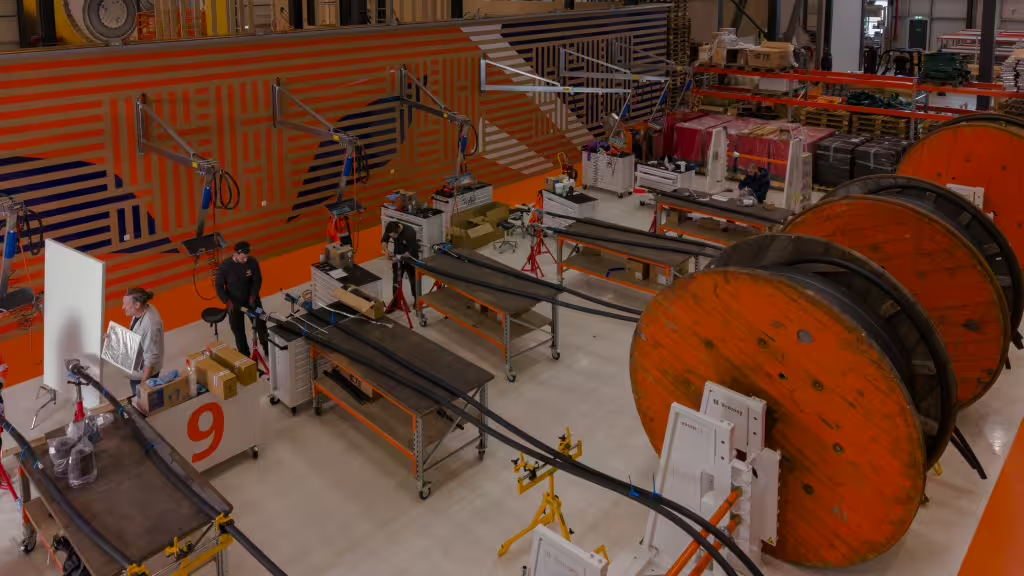
A mobile high-voltage test unit is a transportable test system that brings high-voltage testing capability to the project site. It lets cables and other assets be tested on location instead of in a laboratory.
How a mobile test unit works
The unit generates a controlled high test voltage and applies it to the asset under test, such as a newly installed cable. The result shows whether the insulation withstands the voltage. Depending on the asset and the applicable standard, the voltage can come from an AC test transformer, a frequency-tuned resonant system or a very low frequency (VLF) source.
The Mohaupt range
The Mohaupt range that Reynard can supply includes:
- AC test equipment and high-voltage sources
- Conventional HV test transformers
- Frequency-tuned resonant test systems
- VLF test sets for on-site power cable testing
When a mobile unit is used
Typical uses are commissioning tests after cable installation or jointing, maintenance testing and test campaigns on wind farm, substation and grid projects. Bringing the test equipment to site lets the test follow the construction schedule.
Choosing the right configuration
The right unit depends on the asset, the voltage level, the cable length and capacitance, the applicable test standard and the site. Reynard reviews these details before confirming a configuration and can supply experienced specialists for safe execution and reporting.
Frequently asked questions
Can Reynard perform the high-voltage tests as well?
Yes. The rental can be combined with Reynard high-voltage specialists for planning, safe execution, supervision and reporting.
Can a mobile test unit be used offshore?
Offshore use is reviewed per project. Reynard checks mobilisation, access, lifting, safety documentation and the required support crew before confirming availability.