
What is a bay in a substation?
A bay is the section of a substation that holds all the switching, measuring and protection equipment for one circuit. Each line, cable, transformer or generator connected to the substation’s busbars has its own bay, so it can be switched, measured and protected on its own without affecting the rest of the substation. In Dutch the same thing is called a veld or schakelveld.
What a bay contains
A typical high-voltage bay contains:
- a circuit breaker, which switches the circuit and interrupts fault currents;
- disconnectors (isolators) on either side of the breaker, which give a visible isolation point for maintenance. See disconnect switch;
- an earthing switch, which earths the circuit before anyone works on it;
- current and voltage transformers, which feed the meters and protection relays;
- surge arresters, often at the cable or line connection;
- protection and control equipment, usually in a relay room or a local control cabinet next to the bay.
Types of bays
- Line or cable bay (feeder bay): connects an overhead line or an underground cable.
- Transformer bay: connects a power transformer.
- Bus coupler or bus section bay: connects two busbars or busbar sections.
- Capacitor or reactor bay: connects reactive power compensation.
Air-insulated and gas-insulated bays
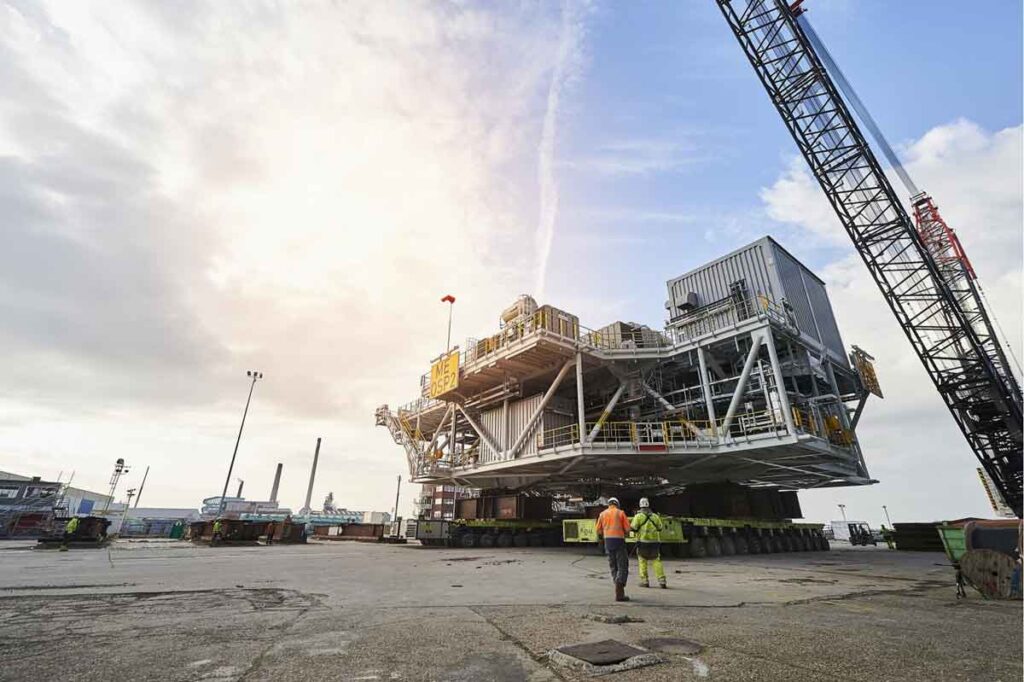
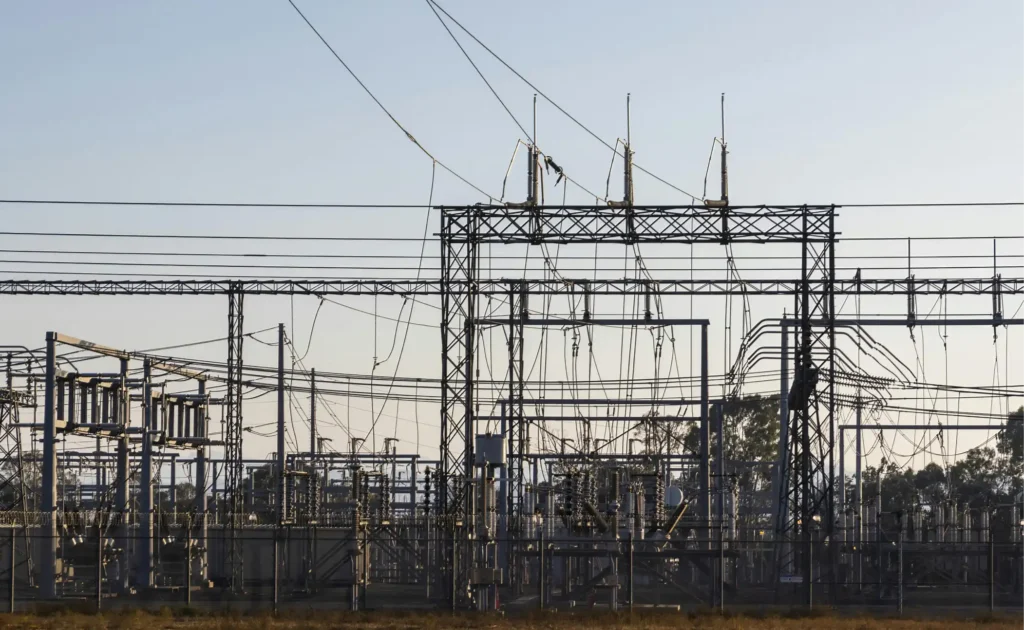
In an air-insulated substation (AIS), a bay is laid out in the open air, with its equipment in a row on steel structures, and a bay can be tens of metres long. In a gas-insulated substation (GIS), the same equipment sits inside metal enclosures filled with insulating gas, and a bay is a compact module of a few metres. GIS is used where space is limited, such as in cities and on offshore substations.
Cable connections in a bay
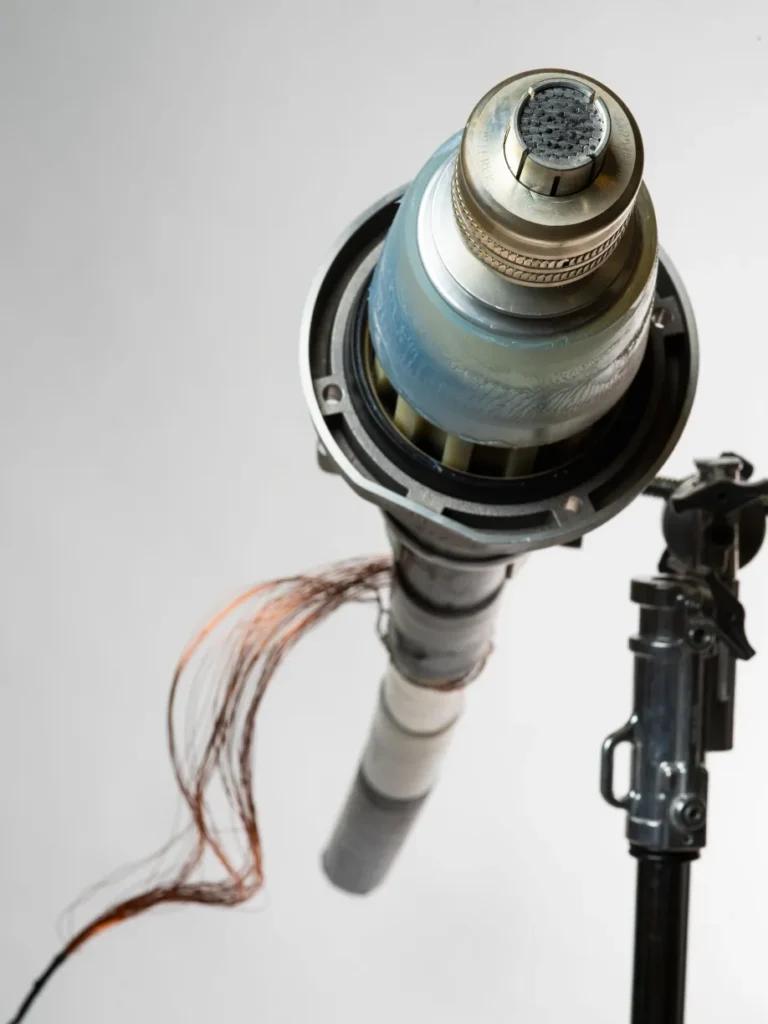
A cable bay ends where the high-voltage cable connects. In an AIS bay that is an outdoor cable termination (sealing end) on a support structure. In a GIS bay the cable plugs into the switchgear through a GIS cable termination. Reynard installs and tests these high-voltage cable terminations. See cable terminations, substation and onshore high-voltage connections.