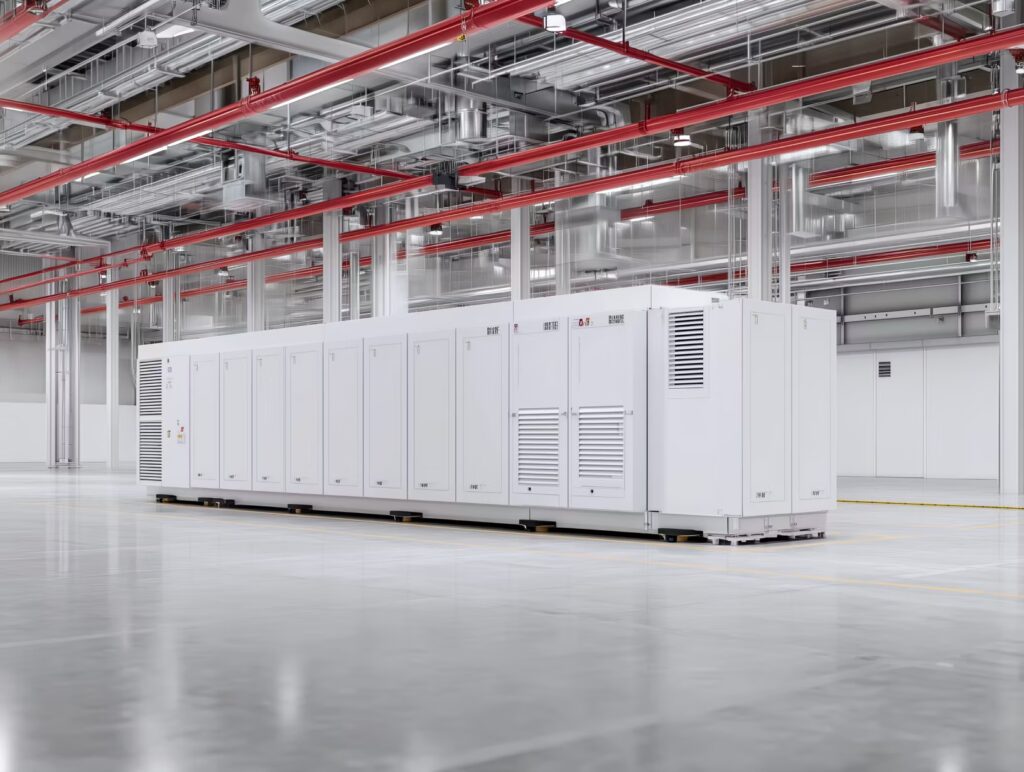


Battery Energy Storage Systems (BESS) are rapidly becoming a cornerstone of the global energy transition. By storing electricity and releasing it when needed, BESS facilities support grid stability, balance renewable generation, and optimise energy use. Behind every successful BESS installation lies a carefully designed transmission setup, where cables and their terminations play a vital role in ensuring safety, reliability, and efficiency.
In this article, we’ll explore how BESS plants connect to the grid, and why cables and their terminations are the unsung heroes of this infrastructure.
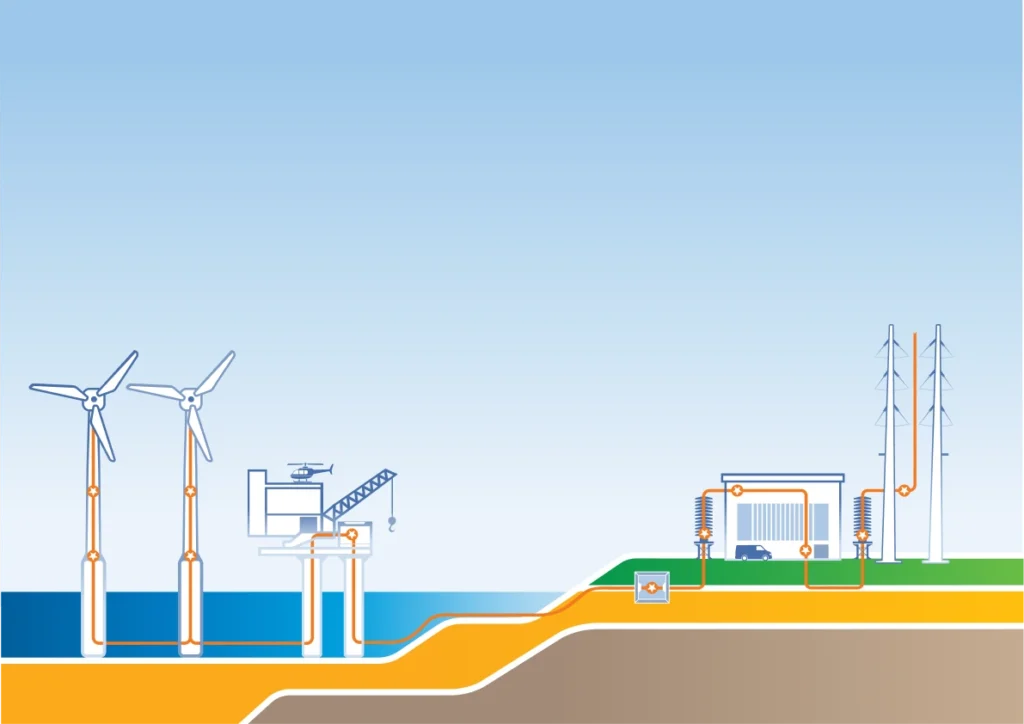
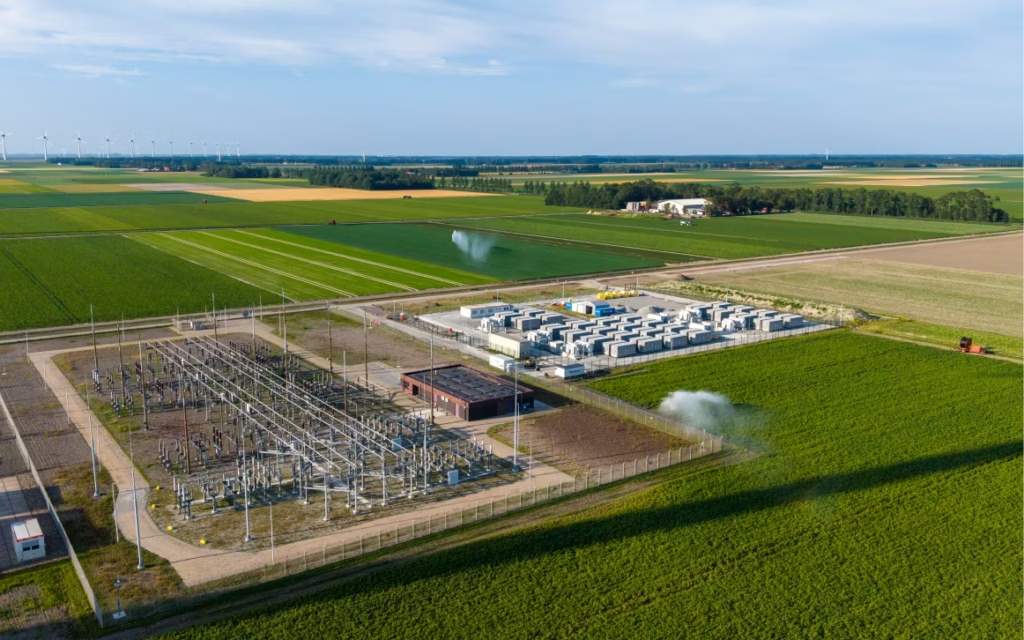
How BESS Plants Connect to the Grid
At a high level, electricity transmission in a BESS facility involves bidirectional flow:
- Charging phase: Power is drawn from the grid in AC form and converted to DC through rectifiers, allowing batteries to store energy efficiently.
- Discharging phase: Stored DC power is converted back to AC via inverters, synchronised with the grid’s frequency (50/60 Hz), and delivered to transmission or distribution networks.
Because batteries and inverters operate at low voltages (208V–1kV), transformers are required to step up the voltage to medium voltage (e.g., 34.5kV) or even high-voltage transmission levels (69–380kV) for utility-scale projects. Substations, breakers, and auxiliary systems complete the setup, ensuring seamless integration and compliance with local grid codes (e.g., IEEE or utility-specific standards).
The Critical Role of Cables in BESS
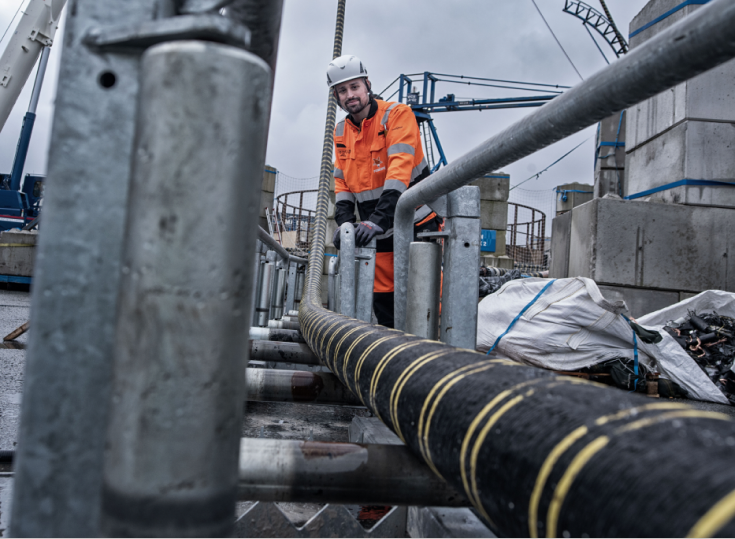
Cables form the circulatory system of a BESS, transmitting both power and data across the facility:
- Power Transmission
- DC cables link battery racks to inverters, often handling up to 1500V DC.
- AC cables connect inverters to transformers and ultimately the grid.
- Both must withstand high thermal loads and operate reliably for 20–30 years.
- DC cables link battery racks to inverters, often handling up to 1500V DC.
- Control and Monitoring
- Multi-conductor cables carry communication signals for the Battery Management System (BMS), monitoring state-of-charge, temperature, and safety parameters in real time.
- Multi-conductor cables carry communication signals for the Battery Management System (BMS), monitoring state-of-charge, temperature, and safety parameters in real time.
- Auxiliary Systems
- Cables also power cooling (HVAC), fire suppression, and SCADA systems for safety and operational control.
- Cables also power cooling (HVAC), fire suppression, and SCADA systems for safety and operational control.
Cable Types and Protection
- Flexible DLO cables are used in tight spaces.
- Specialised energy storage cables offer enhanced insulation against wear and fault risk.
- MDPE sheathing protects outdoor runs, while LSZH jackets comply with indoor fire safety rules.
- Cable cleats prevent dangerous movement during short-circuit events.
These design considerations keep BESS plants reliable even under demanding conditions.
Why Terminations Matter in BESS Plants
If cables are the circulatory system, terminations are the joints—the points where power flow is made secure and efficient. In BESS, terminations must handle high currents and voltages while preventing failures such as arcing or moisture ingress.
Key Functions of Terminations
- Secure connections: Provide low-resistance, mechanically strong bonds to equipment like batteries, inverters, or transformers.
- Fault prevention: Properly installed terminations minimise overheating, voltage stress, and contact resistance. Thermal imaging is often used to detect early failures.
- Scalability: Pre-assembled harnesses with standardised terminations simplify modular expansion in large-scale BESS.
Common Termination Types
- Heat-shrink: Offers a tight seal for MV/HV joints.
- Cold-shrink: Quick, tool-free installation with excellent sealing.
- Pre-moulded push-on: Silicone-based, ideal for confined spaces.
- Compression lugs or spring terminations: Common in high-power connections, ensuring consistent torque and contact quality.
Cables and Terminations: Enabling Grid Reliability
Well-designed cables and terminations directly impact BESS efficiency and safety:
- They reduce electrical losses during charge/discharge cycles.
- They protect against system faults that could lead to downtime or fires.
- They enable long-term reliability, supporting the 20–30 year operational lifespan expected of BESS facilities.
By securing these critical components, operators can unlock the full value of BESS: fast frequency response, renewable integration, congestion relief, and stable grid support.
Conclusion
As BESS projects scale worldwide, attention often focuses on inverters, transformers, or control systems. Yet, it’s the cables and terminations—the connectors of energy and data—that ensure the system operates safely and reliably for decades. For developers, EPCs, and utilities, investing in the right cabling and termination solutions is essential to guarantee performance and protect long-term returns.
At Reynard High Voltage Solutions, we specialise in termination, testing, and fault finding across high-voltage infrastructure, including BESS plants. With decades of high-voltage experience, our teams deliver the expertise needed to make your energy storage project a success.