
The Invisible Friction: Avoiding BESS Project Delays in the Balance of Plant
A large-scale Battery Energy Storage System (BESS) project doesn’t start slowly. However, BESS project delays often derail momentum once investors make the final decision. When hundreds of millions are on the line, the clock starts ticking immediately. Returns depend entirely on how fast the system becomes operational. Consequently, from day one, there is extreme urgency. But unfortunately, that urgency is not found everywhere.
The Core Conflict Behind BESS Project Delays
On one side, investors and developers want to move fast because every week of delay counts against the bottom line. In contrast, utilities, grid operators, and local authorities cannot afford to move fast. They are responsible for:
- Grid stability
- Public safety
- Regulatory compliance
- Long-term reliability
Their role is not to accelerate; instead, their role is to verify. Therefore, this fundamental difference in objectives creates friction that often leads to significant BESS project delays.
Identifying Where BESS Project Delays Specifically Occur
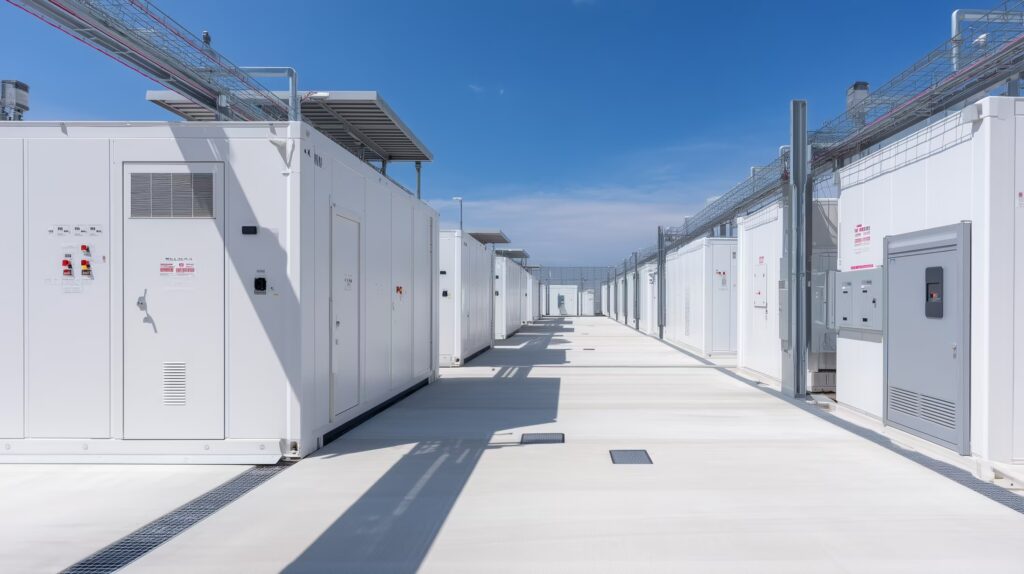
Interestingly, delays in BESS projects rarely come from the battery technology itself. Instead, they happen in the complex spaces between systems—the areas often overlooked during early planning. Complexity accumulates in:
- Grid connection design and permitting alignment.
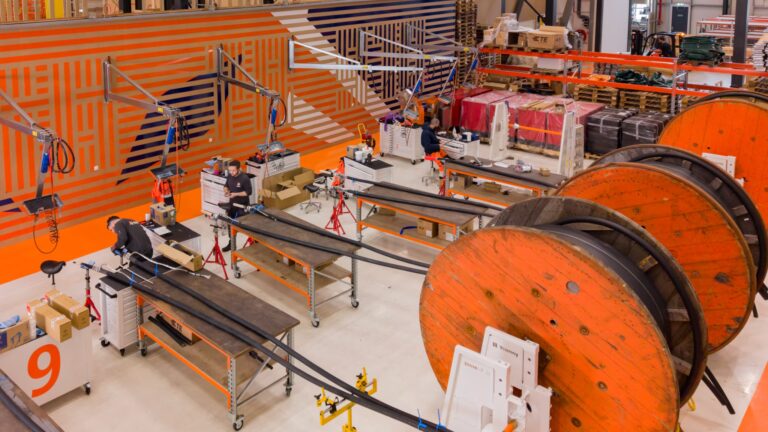
- Cable routing and high-voltage installation.
- Interfaces between the BESS, PCS, and transformers.
- Final testing and certification processes.
In other words, the Balance of Plant (BoP) is the primary source of risk. Specifically, many teams make the mistake of treating BoP as a secondary, follow-up scope. By the time they address it, interfaces are already fixed and risks are already embedded. As a result, every correction costs valuable time.
Speed Comes From Control, Not Rush
Speed in energy projects does not come from pushing harder during the construction phase. Rather, it comes from early control and coordination. You can learn more about international standards for grid stability from the International Energy Agency (IEA) to understand why these verification steps are so rigid.
To prevent BESS project delays, you must focus on:
- Clear scope definition very early in the process.
- Understanding interfaces before physical execution begins.
- Aligning stakeholders from the start of the project.
- Identifying real-world risks based on field experience.
How Reynard Keeps Projects Moving
At Reynard, we operate exactly in the space where projects tend to slow down. Whether we are working from our main offices or directly on-site, we combine high-voltage expertise with engineering insight. This allows us to:
- Define the right scope early: This prevents costly redesigns and rework later in the timeline.
- Align technical interfaces upfront: We bridge the gap between BESS, PCS, transformers, and the grid.
- Execute high-voltage work predictably: We handle the critical high-voltage terminations where delays typically have the highest impact.
- Reduce dependency risk: By taking responsibility for the critical path, we help you avoid BESS project delays.
The Promise
We do not promise speed by cutting corners. Instead, we deliver speed by removing uncertainty. Projects move faster because fewer things go wrong and because execution follows a plan that already accounted for reality.
If you are developing or delivering a project and want to reduce BESS project delays in the Balance of Plant, we are ready to support you from early definition to final energisation.
Contact us today to keep your project moving.